Center for Automation Technologies and Systems (CATS)

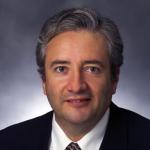
B. Wayne Bequette
Name: B. Wayne Bequette
Title:Professor
Department Chemical and Biological Engineering
School Engineering
Center Center for Automation Technologies and Systems (CATS) Center for Biotechnology and Interdisciplinary Studies (CBIS) Center for Fuel Cell and Hydrogen Research (CFCHR) Center for Future Energy Systems (CFES)
Website:http://homepages.rpi.edu/~bequeb/bwbres.html
Bio Dr. Bequette served as President of the American Automatic Control Council (AACC) in 2008-9, and currently serves as the AIChE CAST Division Programming Chair (2010-2013). He is a Fellow of the AIChE (May, 2008), was inducted into the Arkansas Academy of Chemical Engineers (April, 2007), received the Rensselaer School of Engineering Research Excellence Award (2008), and was named a Trustee of the CACHE Corporation (2010-2012).

Dr. Bequette is the author of Process Control: Modeling, Design and Simulation (2003) and Process Dynamics: Modeling, Analysis and Simulation (1998), both published by Prentice Hall. He served as the Guest Editor of Diabetes Technology and Therapeutics (February, 2005), and also edited special issues on Process Control for the IEEE Control Systems Magazine (August and December, 2006). He is a founding member of the editorial board of the Journal of Diabetes Science and Technology, and has co-edited a number of special issues on algorithms for sensors and a closed-loop artificial pancreas.
Details
Education 1980 B.S. Ch.E. University of Arkansas, Fayetteville 1985 M.S.E. University of Texas, Austin 1986 Ph.D. University of Texas, Austin
Scholarly Works:
  • Cameron, F., B.W. Bequette, D.M. Wilson, B.A. Buckingham, H. Lee and G. Niemeyer “A Closed-Loop Artificial Pancreas Based on Risk Management,” J. Diabetes Sci. Technol., 5(2), 368-379 (2011).
  • Kuure-Kinsey, M. and B.W. Bequette “A Multiple Model Predictive Control Strategy for Disturbance Rejection,” Ind. Eng. Chem. Res. 49(17), 7983-7989 (2010).
  • Dassau, E., F. Cameron, H. Lee, B.W. Bequette, H. Zisser, L. Jovanovic, H.P. Chase, D.M. Wilson, B.A. Buckingham and F.J. Doyle III. “Real-time Hypoglycemia Prediction Suite Using Continuous Glucose Monitoring: A safety net for the artificial pancreas,” Diabetes Care, 33(6), 1249-1254 (2010).
  • Buckingham, B, H.P. Chase, E. Dassau, E. Cobry, P. Clinton, V. Gage, K. Caswell, J. Wilkinson, F. Cameron, H. Lee, B.W. Bequette, F.J. Doyle III “Prevention of Nocturnal Hypoglycemia Using Predictive Alarm Algorithms and Insulin Pump Suspension,” Diabetes Care, 33(5), 1013-1018 (2010).
  • Bequette, B.W. Continuous Glucose Monitoring: Real-Time Algorithms for Calibration, Filtering and Alarms. J. Diabetes Science and Technology, 4(2), 404-418 (2010).
  • Bequette, B.W. Process Control: Modeling, Design and Simulation, Prentice Hall, Upper Saddle River, NJ (2003).
  • Bequette, B.W. Process Dynamics: Modeling, Analysis and Simulation, Prentice Hall, Upper Saddle River, NJ (1998).
Recognitions:
  • AIChE Fellow (May, 2008)
  • Arkansas Academy of Chemical Engineers (April, 2007)
  • Trustee of the CACHE Corporation (2010-2012)
  • Rensselaer School of Engineering Research Excellence Award (2008)
Theodorian Borca-Tasciuc
Name: Theodorian Borca-Tasciuc
Title:Associate Professor
Department Mechanical Aerospace and Nuclear Engineering
School Engineering
Center Center for Automation Technologies and Systems (CATS) Center for Future Energy Systems (CFES) Center for Integrated Electronics (CIE) Rensselaer Nanotechnology Center (RNC) Smart Lighting Engineering Research Center (ERC)
Website:http://nanotec.meche.rpi.edu/
Bio Upon graduating from Bucharest University, Theodorian Borca-Tasciuc spent several months as a research assistant for The Institute of Physics and Technology of Radiation Devices, also located in Bucharest. He joined Duke University's Department of Mechanical Engineering and Materials Science for over a year as a graduate student research assistant before beginning work on his doctorate at UCLA (PhD 2000).

Dr. Theodorian Borca-Tasciuc has started his academic career in 2001 at Rensselaer Polytechnic Institute and since 2007 he is an associate professor. He is the director of the Nanoscale Thermophysics and Energy Conversion Laboratory (NanoTEC) on the Rensselaer campus. He received the NSF CAREER award (2004), is an associate editor for the Journal of Nanomaterials, and a member of the ASME’s K8 committee on Fundamentals of Heat Transfer. He has organized and chaired symposia and sessions on nanoscale thermal transport and energy conversion with ASME and MRS.

Research Description

The main research theme in the Nanoscale Thermophysics and Energy Conversion(NanoTEC) laboratory directed by Dr. Theodorian Borca-Tasciuc is engineering nanoscale thermal transport and thermoelectric energy conversion. His work focuses on experimental investigations in synergy with physical models and materials structure. Features in the investigated samples (thin films, nanoparticles, nanowires, or the nano-domains in nanomaterials) are typically smaller than characteristic length scales of the heat carriers (such as the carrier mean free path), so conduction of heat can strongly deviate from the classical Fourier law. Similarly, nanoscale heat sources could also exhibit non-classical conduction of heat. These are critical issues for the thermal management of nanodevices, nanointerconnects, optoelectronics, or the design of nanocomposites and nanomaterials.
On another hand, nanostructures and nanostructured materials enable novel ways to independently control the thermoelectric properties (Seebeck coefficient and electrical and thermal conductivities) that define the thermoelectric figure of merit Z, a metric important for thermoelectric energy conversion applications ( such as solid state refrigeration and power generation). The enhancement of Z in nanostructures is mainly effected through control of size, interfaces, and doping in the material. The goal is to obtain non-dimensional figures of merit (ZT, T is temperature) that increase to values as high as 1.5-3, from the current values <1, to revolutionize solid state thermoelectric applications for cooling and power generation from waste heat.

Understanding and engineering the thermal and thermoelectric transport at nanoscale is therefore an essential and challenging part of Dr. T. Borca-Tasciuc’s research. A critical role is played by development of experimental techniques able to probe transport properties at nanoscale, in nanomaterials, across-nanointerfaces, or to test the operation of nanoscale thermoelectric devices. These techniques are employed to perform studies of property-structure relationship to understand and optimize thermal and thermoelectric transport as required by specific applications. Selected examples of techniques developed include a scanning thermal microprobe for quantitative characterization of the thermal conductivity and Seebeck coefficient with microscale resolution, a transient method for measurement of all thermoelectric properties as well as electrical and thermal contact resistances in films, a photothermoelectric method to determine the anisotropic thermal conductivity and the interface thermal resistance in thin film on-substrate systems, a Joule heating thermometry method for characterization of thermal transport from nanoscale heat sources.

Selected investigations include: 1) discovery of a new class of highly scalable, high figure of merit, nanostructured bulk thermoelectric materials (patent pending); 2) implementation of a novel mechanism for formation of high thermal conductivity networks in polymer composites filled with nanoparticles (patent pending); 3)investigations of anisotropic thermal properties in aligned carbon nanotube arrays and aligned carbon-nanotube polymer composites; 4) studies of the interface thermal resistance at the native interface between carbon nanotube arrays and the silicon substrate; 5) investigations of thermal transport in Si/Ge and Si/SiC multilayers; 6) investigations of non-Fourier thermal transport from individual nanoscale heaters to silicon substrates;
Details
Education Ph.D. University of California, Los Angeles
Scholarly Works:
  • This is a list of selected works. For a full list of publications and additional information please check the NanoTEC laboratory website:http://nanotec.meche.rpi.edu/
  • A New Class of Doped Nanobulk High-Figure-of-Merit Thermoelectrics by Scalable Bottom-up Assembly, R. J. Mehta, Y. Zhang, C. Karthik, B. Singh, R. W. Siegel, T. Borca-Tasciuc & G. Ramanath, Nature Materials, Vol. 11, 233-240, 2012.
  • Enhanced Thermal Conductivity in a Nanostructured Phase Change Composite due to Low Concentration Graphene Additives, F.Yavari, H. Raeisi Fard, K. Pashayi, M. A. Rafiee, A. Zamiri, Z. Yu, R. Ozisik, T. Borca-Tasciuc and N. Koratkar, J. Phys. Chem. C, Vol. 115, 8753, 2011.
  • A non-contact thermal microprobe for local thermal conductivity measurement, Y. Zhang, E. Castillo, R. Mehta, G. Ramanath, and T. Borca-Tasciuc, Review of Scientific Instruments, Vol. 82, 024902, 2011.
  • Thermoelectric characterization by transient Harman method under non-ideal contact and boundary conditions, E. E. Castillo, C. L. Hapenciuc, and T. Borca-Tasciuc, Review of Scientific instruments, Vol. 81, 044902, 2010.
  • A microprobe technique for simultaneously measuring thermal conductivity and Seebeck coefficient of thin films, Y. Zhang, C. L. Hapenciuc, E. E. Castillo, T. Borca-Tasciuc, R. J. Mehta, C. Karthik, and G. Ramanath, plied Physics Letters, Vol. 96, 062107, 2010.
  • Temperature dependent thermal conductivity of Si/SiC amorphous multilayer films, M. Mazumder, T. Borca-Tasciuc, S. Teehan, H. Efstathiadis, E. Stinzianni, and V. Solovyov, Applied Physics Letters, Vol. 96, 093103, 2010.
  • Effect of Nanoparticles on the Liquid-Gas Surface Tension of Bi2Te3 Nanofluids, S. Vafaei, A. Purkayastha, A. Jain, G. Ramanath and T. Borca-Tasciuc, Nanotechnology, Vol. 20, 1855702, 2009.
  • Thermal resistance of the native interface between vertically aligned multiwalled carbon nanotube arrays and their SiO2/Si substrate, Y. Son, S. K. Pal,T. Borca-Tasciuc, P. M. Ajayan, R. W. Siegel, Journal of Applied Physics, Vol. 103, 024911, 2008.
  • Electrowetting on dielectric-actuation of microdroplets of aqueous bismuth telluride nanoparticle suspensions, Raj K Dash, T Borca-Tasciuc, A Purkayastha and G Ramanath, Nanotechnology, Vol. 18, 475711, 2007.
  • Effect of nanoparticles on sessile droplet contact angle, Vafaei, S., Borca-Tasciuc, T., Podowski, M. Z., Purkayastha, A., Ramanath, G., and Ajayan, P. M., Nanotechnology, Vol. 17, 2523-2527, 2006.
  • Anisotropic Thermal Diffusivity of aligned multiwall carbon nanotube arrays, Borca-Tasciuc, T., Vafae, S., Borca-Tasciuc, D.-A., Wei, B. Q, Vajtai, R., and Ajayan, P., Journal of Applied Physics, Vol. 98, 054309, 2005.
  • Data Reduction in 3w Method for Thin-Film Thermal Conductivity Determination, Borca-Tasciuc, T., Kumar, A. R., and Chen, G., Review of Scientific Instruments, Vol. 72, 2139-2147, 2001.
  • Thermal Conductivity of Symmetrically Strained Si/Ge Superlattices, Borca-Tasciuc, T., Liu, W. L., Liu, J. L., Zeng, T., Song, D. W., Moore, C. D., Chen, G., Wang, K. L., Goorsky, M. S., Radetic, T., Gronsky, R., Sun, X., and Dresselhauss, M. S., Superlattices and Microstructures, Vol. 28, 199-206, 2000.
  • Thin-film Thermophysical Property Characterization by Scanning Laser Thermoelectric Microscope,Borca-Tasciuc, T. and Chen, G., International Journal of Thermophysics, Vol. 19, 557-567, 1998.
Selmer Bringsjord
Name: Selmer Bringsjord
Title:Professor & Department Head
Department Cognitive Science
School Humanities, Arts and Social Sciences
Center Center for Automation Technologies and Systems (CATS)
Website:http://www.rpi.edu/~brings/
Bio Selmer Bringsjord specializes in the logico-mathematical and philosophical foundations of arti cial intelli-
gence (AI) and cognitive science, and in collaboratively building AI systems on the basis of computational
logic. Though he spends considerable \engineering" time in pursuit of ever-smarter computing machines,
he claims that \armchair" reasoning time has enabled him to deduce that the human mind will forever be
superior to such machines.
Bringsjord received the bachelor's degree from the University of Pennsylvania, and the PhD from Brown
University, where he studied under Roderick Chisholm. Bringsjord is not unhappy about the apparent
fact that he is through Chisholm an intellectual descendant of Leibniz, many of whose views to a high
degree align with his own, and whose interest in a rather wide range of intellectual matters matches his own
trans-disciplinary modus operandi.
Bringsjord has long been on faculty at America's oldest technological university: Rensselaer Polytechnic
Institute (RPI) in Troy; where he currently holds appointments in the Department of Cognitive Science, the
Department of Computer Science, and the Lally School of Management & Technology, and where as a Full
Professor he teaches AI, formal logic, human and machine reasoning, philosophy of AI, other topics relating
to formal logic, and the intellectual history of New York City and the Hudson Valley. Funding for his r&d
has come from the Luce Foundation, the National Science Foundation, the Templeton Foundation, AT&T,
IBM, Apple, AFRL, ARDA/DTO/IARPA, ONR, DARPA, AFOSR, and other sponsors. Bringsjord has
consulted to and advised many companies in the general realm of intelligent systems, and continues to do
so.
Details
Education PhD, Philosophy. Brown University
Scholarly Works:
  • http://homepages.rpi.edu/~brings/select.html
Recognitions:
  • 2004 Trustees (Annual) Outstanding Achievement Award (scholarly productivity)
  • The 1995 Hesburgh Award (member of winning Rensselaer team; for excellence in undergraduate
Wai Kin (Victor) Chan
Name: Wai Kin (Victor) Chan
Title:Associate Professor
Department Industrial and Systems Engineering
School Engineering
Center Center for Automation Technologies and Systems (CATS)
Website:http://sigma.dses.rpi.edu/ROSL
Bio Dr. Chan's research interests are in the areas of simulation, optimization, and statistics.

We are looking for highly motivated graduate students with a master degree in statistics, mathematics, or operations research/industrial engineering (mathematical programming, stochastic programming, and agent-based simulation).

Details
Education Ph.D. Industrial Engineering and Operations Research (University of California, Berkeley, 2005), M.Eng. Electrical Engineering (Tsinghua University, 2000), B.E. Electrical Engineering (Shanghai Jiao Tong University, 1997)
Joe H. Chow
Name: Joe H. Chow
Title:Professor & Associate Dean of the School of Engineering, Electrical, Computer, & Systems Engineering
Department Electrical, Computer, and Systems Engineering
School Engineering
Center Center for Automation Technologies and Systems (CATS)
Website:http://www.ecse.rpi.edu/homepages/chowj/
Details
Education Ph.D. Electrical Engineering (University of Illinois, 1977), M.S. Electrical Engineering (University of Illinois, 1975), B.S. Electrical Engineering and Mathematics (University of Minnesota, 1974)
Scholarly Works:
  • Power System Stabilizers as Undergraduate Control Design Projects (2004)
  • Pelton Turbine Deflector Overspeed Control in Small Power Systems (2004)
  • A Common Modeling Framework of Voltage-Sourced Converters for Loadflow, Sensitivity, and Dispatch Analysis (2004)
  • Pumped-Storage Hydro-Turbine Bidding Strategies in a Competitive Electricity Market (2004)
  • A Dispatch Strategy for a Unified Power Flow Controller to Maximize Voltage-Stability Limited Power Transfer (2004)
  • Hierarchical Pelton Turbine Control in a Small Power System (2003)
  • A Multi-layer Petri Net Model for Deregulated Electric Power Systems (2002)
Alan A Desrochers
Name: Alan A Desrochers
Title:Professor
Department Electrical, Computer, and Systems Engineering
School Engineering
Center Center for Automation Technologies and Systems (CATS)
Website:http://www.eng.rpi.edu
Details
Education Ph.D. (Purdue University)
Juergen Hahn
Name: Juergen Hahn
Title:Professor
Department Biomedical Engineering Chemical and Biological Engineering
School Engineering
Center Center for Automation Technologies and Systems (CATS) Center for Biotechnology and Interdisciplinary Studies (CBIS)
Website:http://homepages.rpi.edu/~hahnj/group.html
Bio Juergen Hahn was born in Grevenbroich, Germany, in 1971. He received his diploma degree in engineering from RWTH Aachen, Germany, in 1997, and his MS and Ph.D. degrees in chemical engineering from the University of Texas, Austin, in 1998 and 2002, respectively. He was a post-doctoral researcher at the chair for process systems engineering at RWTH Aachen, Germany, before joining the department of chemical engineering at Texas A&M University, College Station, in 2003. He joined the Rensselaer Polytechnic Institute as a professor in 2012 and currently holds appointments in the department of biomedical engineering and the department of chemical & biological engineering. His research interests include systems biology and process modeling and analysis with over 60 articles and book chapters in print. Dr. Hahn is a recipient of a Fulbright scholarship (1995/96), received the Best Referee Award for 2004 from the Journal of Process Control, the CPC 7 Outstanding Contributed Paper Award in 2006, and was named the 2010 CAST Outstanding Young Researcher. He is currently serving as an associate editor for the journals Automatica, Control Engineering Practice, and the Journal of Process Control.
Details
Education
Ph.D.,University of Texas at Austin,  (2002)
M.S.,University of Texas at Austin,(1998)
Diploma,    RWTH Aachen, Germany, (1997)
Scholarly Works:
  • Z. Huang, C. Moya, A. Jayaraman, and J. Hahn. Using the Tet-On System to Develop a Procedure for Extracting Transcription Factor Activation Dynamics. Molecular BioSystems 6, No. 10, pp. 1883-1889 (2010)
  • C. Qu and J. Hahn. Computation of Arrival Cost for Moving Horizon Estimation via Unscented Kalman Filtering. Journal of Process Control 19, No. 2, pp. 358-363 (2009).
  • Z. Huang, F. Senocak, A. Jayaraman, and J. Hahn. Integrated Modeling and Experimental Approach for Determining Transcription Factor Profiles from Fluorescent Reporter Data. BMC Systems Biology 2:64 (2008).
  • Y. Chu and J. Hahn. Integrating Parameter Selection with Experimental Design under Uncertainty for Nonlinear Dynamic Systems. AIChE Journal 54, No. 9, pp. 2310-2320 (2008).
  • Y. Chu, A. Jayaraman, and J. Hahn. Parameter Sensitivity Analysis of IL-6 Signaling Pathways. IET Systems Biology 1, No. 6, pp. 342-352 (2007).
  • A.K. Singh and J. Hahn. Sensor Location for Stable Nonlinear Dynamic Systems: Multiple Sensor Case. Industrial & Engineering Chemistry Research 45, No. 10, pp. 3615-3623 (2006).
Recognitions:
  • Associate Editor, Journal of Process Control 2010-
  • Associate Editor, Automatica 2011-
  • Associate Editor, Control Engineering Practice 2007-

  • AIMBE Fellow, 2013
  • CAST Outstanding Young Researcher Award, 2010
  • Ray Nesbitt Development Professorship II, 2010
  • Keller Faculty Fellowship,2008
  • Brockett Professorship, 2008
  • CPC 7 Outstanding Contributed Paper Award, 2006
  • Outstanding Reviewer, Automatica, 2005, 2006, 2007
  • Best Referee Award, Journal of Process Control, 2004
  • William S. Livingston Graduate Fellowship, 2001
  • David Bruton, Jr. Graduate Fellowship, 2000
  • Springorum Medal, 1998
  • Fulbright Scholarship, 1995
Martin Hardwick
Name: Martin Hardwick
Title:Professor and Acting Head
Department Computer Science
School Science
Center Center for Automation Technologies and Systems (CATS)
Website:http://www.steptools.com/pressroom/profiles/hardwick.html
Bio As a specialist in data semantics for engineering applications, Dr. Hardwick has supervised ten Ph.D. students and numerous masters students. Dr. Hardwick joined RPI in 1989 as an Assistant Professor and has risen through the ranks to be a tenured Full Professor with more than 60 referred papers. Currently he is Acting Head of the department. He has won several NSF grants, was a principle investigator for the DARPA Initiative in Concurrent Engineering project, the National Industrial Information Infrastructure Protocols (NIIIP) project and the NIST ATP Model Driven Intelligent Control of Manufacturing project. Software written by Dr. Hardwick is included in the libraries of many Computer Aided Design and Manufacturing systems where it is used to read and write data defined by the ISO 10303 STEP standards. He received his bachelors and doctorate degrees from Bristol University in the UK.
Details
Education BSc. - Bristol University, UK, June 1978 Ph.D. - Bristol University, UK, June 1982
Scholarly Works:
  • M. Hardwick and D. Loffredo, “Challenges and Choices in the Specification and Implementation of the STEP-NC AP-238 Standard”, ACM/ASME Journal of Computing and Information Science in Engineering, Vol.7, No.3, September 2007.
  • M. Hardwick and D. Loffredo, “STEP-NC AP-238 Deployment”, International Journal of Computer Integrated Manufacturing, Vol. 19, No.6, September 2006.
  • M. Hardwick, “On STEP-NC and the Complexities of Product Data Integration”, ACM/ASME Journal of Computing and Information Science in Engineering, Vol.4, No.1, March 2004.
  • M. Hardwick, D. Spooner, T. Rando P. Denno and K. Morris, “Lessons Learned Developing Protocols for the Industrial Virtual Enterprise,” CAD Journal, January 2000.
  • M. Hardwick, D. Spooner, T. Rando and K. Morris, “Data Protocols for the Industrial Virtual Enterprise,” IEEE Internet Computing, Vol. 1, No. 1, January/February, 1997.
  • M. Hardwick, D. Spooner, T. Rando and K. Morris, “Sharing Manufacturing Information between Heterogeneous Corporations,” Communications of the ACM, Vol. 39, No. 2, February, 1996.
  • M. Hardwick and D. Spooner, "Comparison of Data Models for CAD Objects," Computer Graphics and Applications, editor L. Hatfield, IEEE Computer Society Press, March 1987, pp. 56-66.
  • M. Hardwick, "Why ROSE is Fast: Five Optimizations in the Design of an Experimental Database System for CAD/CAM Applications", Proceeding of the SIGMOD'87 International Conference, ACM Press, 1987.
Michael K. Jensen
Name: Michael K. Jensen
Title:Professor
Department Mechanical Aerospace and Nuclear Engineering
School Engineering
Center Center for Automation Technologies and Systems (CATS) Center for Flow Physics and Control (CeFPaC) Center for Fuel Cell and Hydrogen Research (CFCHR) Center for Future Energy Systems (CFES) Center for Multiphase Research
Website:http://www.eng.rpi.edu/soe/index.php/faculty/154?soeid=jensem
Bio Michael Jensen received his B.S. in Mechanical Engineering from the University of Missouri-Columbia in 1972 and his M.S. and Ph.D. degrees from Iowa State University in 1976 and 1980, respectively. He began his teaching and research career at the University of Wisconsin-Milwaukee and moved to Rensselaer in 1987. Currently, he is a Professor in the Department of Mechanical, Aerospace, and Nuclear Engineering and holds a Professional Engineers license. Among many other university activities, he has served as Associate Chair for Graduate Studies in the department, been on the executive committee of the Faculty Senate, and served as the student-elected member on the Institute-wide Promotion and Tenure Committee.

As principal investigator on 41 sponsored programs, including 19 multi-year grants from NSF, DOE, NIST, NYSERDA, and industry, and consultant to 25 industry and government organizations, Michael’s research interests have been directed toward convective single- and two-phase heat transfer and the associated fluid flows with an emphasis on these processes in heat exchangers and using enhanced heat transfer techniques. Recent research has focused on microchannel flows and thermal management of electronic systems, solar energy, and fuel cells. With his graduate students (32 MS, 18 PhD), he has performed both fundamental and applied research and has conducted both experimentally and numerically based research on a wide range of topics. Dr. Jensen has published over 180 technical papers, edited 10 volumes, 30 other assorted reports, and has published an undergraduate textbook on thermal and fluids engineering. He has two patents.

Michael has been honored as a Fellow of ASME, twice received the student-chosen Lewis T. Assini Undergraduate Teaching and Counseling Award, received the Ralph R. Teetor Award of SAE, and was awarded the RPI School of Engineering Research Excellence Award. He is active in his profession, having served or is serving on editorial boards of four international journals (Journal of Heat Transfer, Experimental Thermal and Fluid Science; Applied Thermal Engineering, Journal of Mechanical Science and Technology), recently was named as Founding Editor-in-Chief of ASME’s newest journal, Thermal Science and Engineering Applications, led the ASME Heat Transfer Division, and appointed as Alternate Delegate to Assembly for International Heat Transfer Conferences. He has been chair or co-chair of six international conferences (including the National Heat Transfer Conference) and has been invited to be on numerous scientific committees for other national and international conferences. He is an active reviewer for numerous international journals and conferences and NSF, DOE, NASA, and NYSERDA proposals.

Details
Education Ph.D. Iowa State University
Scholarly Works:
  • Christman, K. and Jensen, M.K., 2011, “Effect of Cross Flow Roughness on Solid Oxide Fuel Cells,” Journal of Fuel Cell Science and Technology, Vol. 8 / 024501-1.
  • Gathright, W., Jensen, M.K., and Lewis, D., 2011, “Phase-field model of chemical reactions with an example of a solid electrolyte gas sensor,” Electrochemistry Communications, 13 pp. 520–523.
  • Michna, G.J., Browne, E.A., Jensen, M.K., and Peles, Y., 2011. The effect of area ratio on microjet array heat transfer, International Journal of Heat and Mass Transfer, 54 (9-10), pp.1782-1790, April.
  • Basu, S., Ndaos, S., Michna, G. J., Peles, Y., and Jensen, M. K., 2011, “Flow boiling of R134a in circular microtubes. Part II: Study of critical heat flux condition,” ASME Journal of Heat and Transfer, 133(5), 051503.
  • Basu, S., Ndaos, S., Michna, G. J., Peles, Y., and Jensen, M. K., 2011, “Flow boiling of R134a in circular microtubes. Part I: Study of heat transfer characteristics,” ASME Journal of Heat and Transfer, 133(5), 051502.
  • Zhang, T.J., Wen, J.T., Julius, A., Peles, Y., and Jensen, M.K., 2011, “Stability analysis and maldistribution control of two-phase flow in parallel evaporating channels,” International Journal of Heat and Mass Transfer, submitted, March.
  • Zhang, T.J., Wen, J.T., Peles, Y., Catano, J., Zhou, R.L., Jensen, M.K., 2011, “Two-phase refrigerant flow instability analysis and active control in transient electronics cooling systems,” International Journal of Multiphase Flow, 37, pp.84-97.
  • Zhou, R.L., Zhang, T.J., Catano, J., Wen, J.T., Michna, G.J., Peles, Y., Jensen, M.K., 2010, “The steady-state modeling and optimization of a two-loop refrigeration system for high heat flux electronics cooling,” Applied Thermal Engineering, 30, pp.2347-2356.
  • Phelan, P.E., Gupta, Y., Tyagi, H., Prasher, R., Cattano, J., Michna, G., Zhou, R., Wen, J.T., Jensen, M.K., and Peles, Y., 2010, “Energy efficiency of refrigeration systems for high-heat-flux microelectronics,” Journal of Thermal Science and Engineering Applications, 2, 031004, Sep.
  • “Browne, E.A., Michna, G.J., Jensen, M.K., and Peles, Y., “Microjet Array Single-Phase and Flow Boiling Heat Transfer with R134a,” International Journal of Heat and Mass Transfer, 53 (2010) 5027–5034.