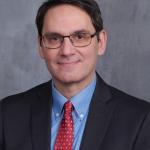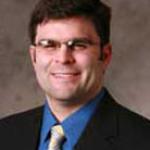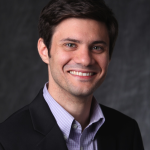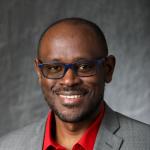

Dr. Dobry's research interests include soil dynamics, geotechnical earthquake engineering and geotechnical dynamic centrifuge testing. He was a leading participant of the group that wrote the new seismic provisions on local site amplification in the 1990's now incorporated in U.S. building codes. He is one o, one of 15 interconnected experimental nodes funded by NSF to revolutionize earthquake engineering research in the U.S. He has written more than 200 technical papers and research reports and has directed 40 PhD and MS theses at Rensselaer.
Sc.D. Civil Engineering (Massachusetts Institute of Technology, 1971)
M.S. Soil Mechanics (National University of Mexico, 1964)
B.S. Structural Engineering (University of Chile, 1963)
Pile Response to Lateral Spreads: Centrifuge Modeling (2003)
Single Piles in Lateral Spreads: Field Bending Moment Evaluation (2003)
Centrifuge Modelling for Seismic Retrofit of an Immersed Tube Tunnel (2003)
Intl. J. of Physical Modelling in Geotechnics, 3 (2) (2002)
Post-Triggering Response of Liquefied Soil in The Free Field and Near Foundations (1998)
Member, National Academy of Engineering
Dobry has served as consultant and member of consulting boards of important and prestigious civil engineering projects, including offshore oil platforms in Venezuela and Australia, earth dams and dikes in California, Puerto Rico and South America, seismic retrofitting of several large bridges in NYC, seismic guidelines for design of new bridges in NYC, and design of the new Rion-Antirion bridge in Greece.
Dobry has been an invited state-of-the-art and keynote speaker at international meetings in the U.S., Mexico, South America, Europe, Japan and Australia. He earned the J. James Croes Medal of the American Society of Civil Engineers in 1985, and was elected member of the National Academy of Engineering in 2004, for fundamental contributions to multiple aspects of geotechnical earthquake engineering.
Dobry is the recipient Rensselaer's William H. Wiley Distinguished Faculty Award for 2008.
* Wave propagation effects on buried pipe
* Permanent ground deformation effects on buried pipe
* Centrifuge testing of buried pipe
* Fragility relations for above ground tanks
Seismic Response of Buried Pipeline: Earthquake damage to buried lifelines such as water, sewer and natural gas lines can be caused by either wave propagation or Permanent Ground Deformation (PGD). Research on both these topics is on-going at Rensselaer. This includes an analytical evaluation of the relationship between seismic damage (repairs per kilometer of pipe) and ground strain, as well as numerical and centrifuge evaluation of buried pipe subject to abrupt PGD at a fault crossing or the margin of a lateral spread. The 1999 MCEER Monograph by O’Rourke and Liu entitled “Response of Buried Pipeline Subject to Earthquake Effects”provide background information and a summary for the topic. An updated Buried Pipeline Monograph is expected early in 2011.
Snow Loading on Roofs:
* Ground Snow Loads
* Drift loads on stepped roofs
* Drift loads on gable roofs
* Eave icing
Snow and Ice Loads on Buildings: Snow loading is a structural design consideration for roofs in most states and the controlling load for at least some structural component in about half the states. Although not a significant load from a structural standpoint ice dams frequently lead to infiltration and costly water damage to interior walls and ceiling surfaces. Research on both issues is ongoing at Rensselaer. Of the many types of snow loads; uniform, sliding snow from a higher roof, etc drifted snow results in higher loads and more potential for structural damage. The Rensselaer water flume is being used to simulate snow drift loading and establish relationships for use in national codes. A guide explaining the ASCE 7-10 snow load provision through design examples and frequently asked questions has been published by ASCE Press.
Ph.D., Northwestern University
Civil Engineering
M.S., Northwestern University
Civil Engineering
B.S., Illinois Institute of Technology
Civil Engineering
Rensselaer Distinguished Teaching Fellow
C. Martin Duke Lifeline Earthquake Engineering ASCE
Jerome Fischbach Travel-Rensselaer
Standard Oil-University of Wisconsin-Parkside Teaching Award
David V. Rosowsky was appointed the 15th Dean of Engineering at Rensselaer in 2009. From 2004-2009, Dr. Rosowsky served as Head of the Zachry Department of Civil Engineering at Texas A&M University, where he also held the A.P. and Florence Wiley Chair in Civil Engineering. Since 1990, Dr. Rosowsky has conducted research in the areas of structural reliability, performance of wood structural systems, design for natural hazards, stochastic modeling of structural and environmental loads, and probability-based codified design. His current research addresses three topics: (1) behavior of the built environment subject to natural hazards, (2) modeling and analysis of load effects on buildings and other structures, with particular emphasis on complex environmental phenomena, and (3) performance-based engineering for design, post-disaster condition assessment, and loss estimation studies. He currently serves on the Editorial Board of the journal Structural Safety and is a past editorial board member of the ASCE Journal of Infrastructure Systems, the ASCE Journal of Structural Engineering and the journal Natural Hazards Review.
Dr. Rosowsky has authored or co-authored more than 130 papers in peer-reviewed journals and more than 150 papers appearing in conference proceedings. A recognized expert in the field of structural reliability, he has been invited to present his research work around the world including invited lecturers in France, Italy, Canada, Japan, Australia and New Zealand. He has supervised more than 20 Masters and Doctoral students. He is the recipient of the ASCE Walter L. Huber Research Prize, the T.K. Hseih Award from the Institution of Civil Engineers (UK), and the ASCE Norman Medal.
Dr. Rosowsky maintains an active research program in wind and earthquake engineering and continues to supervise graduate students and post-doctoral researchers. He is a member of numerous editorial boards, national technical committees, is a registered Professional Engineer, and holds the rank of Fellow of the American Society of Civil Engineers.
Ph.D., Johns Hopkins University Civil Engineering
M.S., B.S., Tufts University Civil Engineering
* 2008-Present Research Assistant Professor, Civil & Environmental Engineering Dept, Rensselaer Polytechnic Institute, Troy, NY
* 2005-Present Technical Manager, Center for Earthquake Engineering Simulation, Civil & Environmental Engineering, Rensselaer Polytechnic Institute, Troy, NY
* 2000-2005 Graduate Research Assistant, Civil & Environmental Engineering, Utah State University, Logan, UT
* 2002 Visiting Student & Graduate Research Assistant, Civil Engineering, The University of Texas, Austin, TX
* 1998-2000 Graduate Student & Project Assistant, Asian Center of Soil Improvement and Geosythetics (ACSIG), Asian Institute of Technology, Bangkok, Thailand
Ph.D. Civil/Geotechnical Engineering (Utah State University, 2005)
M.Eng. Civil/Geotechnical Engineering (Asian Institute of Technology, 2000)
B.E. Civil Engineering (Thammasat University, 1998)
Recipient of “Certificate of Recognition” on behalf of the Project Director, Technical Director, and Team Leads. This award is in recognition of the leadership and dedication provided to the IPET effort (2007)
Recipient of “Commander’s Award for Public Service” with accompanying medal from the Chief, U.S. Army Corps of Engineers. This medal is one of the highest awards given by the US Army to civilians who provided outstanding services to the US Army. This award is in appreciation for the support of New Orleans Recovery through efforts with the Evaluation Task Force of the Hurricane Katrina Interagency Performance (2007)
* Structural Dynamics, Earthquake Engineering
* Seismic Isolation and Energy Dissipation Systems
* Smart Structures
* Structural Vibration Control
* Constitutive Modeling
* System Identification
Professor Symans' general field of research is structural earthquake engineering with a primary emphasis on the development of advanced seismic protection systems for application to building and bridge structures. In addition, he has investigated methods of analysis for evaluating the seismic performance of structures, methods for identifying the dynamic properties of structural systems, and approaches for predicting the seismic performance of buried lifelines. The overarching goal in all of his research is to improve the performance of the built infrastructure such that losses are reduced in future earthquakes. The majority of Professor Symans' research is conducted within the Rensselaer School of Engineering Center for Earthquake Engineering Simulation (CEES).
After completing her Ph.D. in Electrical Engineering at Purdue University, Dr. Yazici was employed as a senior research scientist at the General Electric Company Global Research Center, Schenectady, NY. During her tenure in industry, she worked on radar, transportation, industrial and medical imaging systems. Her work on industrial systems received best paper award in 1997 given by IEEE Transactions in Industrial Application. She was an Assistant Professor at Drexel University, Philadelphia, PA before joining Rensselaer in 2003. She currently serves as an associate editor for the IEEE Transactions on Image Processing and SIAM Journal of Imaging Science. Prof. Yazıcı is the recipient of the Rensselaer Polytechnic Institute 2007 School of Engineering Research Excellence Award. She holds 11 US patents.
Prof. Yazıcı’s research interests span the areas of statistical signal processing, inverse problems in imaging, applied mathematics, remote sensing, biomedical optics, and radar. Specifically, her current projects involve synthetic aperture imaging, passive imaging, imaging in multi-pathing and dynamically changing environments, waveform design, interferometric and polarimetric techniques for remote sensing applications, image formation for X-ray Computed Tomography, diffuse optical image reconstruction, fluorescence diffuse optical tomography, adaptive meshing algorithms for PDE-based inverse coefficient problems, pharmacokinetic-rate imaging, and breast cancer diagnosis.
Dr. Yazici's research interests are statistical signal and image processing, pattern recognition, noncommutative harmonic analysis, inverse problems in radar and medical imaging, in particular optical and X-ray imaging and breast cancer. She holds 11 US patents.
Ph.D. Electrical Engineering (Purdue University, W. Layfayette, IN, 1994), M.S. Mathematics (Purdue University, W. Layfayette, IN, 1990), B.S. Electrical Engineering and Mathematics (Bogazici University, Istanbul, Turkey, 1988)
Dr. Zeghal research interests include: Computational Soil Micro-Mechanics, Geotechnical-System Identification, Seismic Response Monitoring, and Information Technology Applications in Geomechnics. He is active with the Center for Network for Earthquake Engineering Simulation (CEES), Scientific Computation Research Center (SCOREC) and the Inverse Problems Center (IPRPI).
Failure of geosystems due to natural or man-made hazards such as hurricanes, floods, earthquakes, or terrorist attacks may have monumental repercussions, sometimes with dramatic and unanticipated consequences on human life and the country’s economy. Dr. Zeghal’s research focuses on three areas that are central to the national effort to reduce the impact of these hazards: (1) multiscale modeling of geosystems, (2) model validation and calibration, and (3) development of improved optimal design tools.
The methodology of evaluating and predicting the performance of geosystems is undergoing a significant paradigm shift. Computational simulations are destined to become more prominent than empirical approaches and will ultimately become the main tool for analysis and design of civil systems. A hierarchy of adaptive and cost-effective computational models capable of accurately predicting the multiscale and multiphysics response of geosystems is being developed. This hierarchy enables a seamless handling of the initiation and evolution of the various response and failure mechanisms of soils under extreme loading conditions. The hierarchical models range from homogenized continuum to discontinuous coarse-particle formulations. A class of innovative system identification and inverse problem tools are being developed to calibrate these models using experimental data ranging from soil sample and centrifuge tests to full-scale and field tests. This new generation of computational procedures is being translated to practice through careful interactions with practitioners (from industry and government laboratories) and the introduction of changes in the educational curricula of our students.
* Dam Safety
* Physical Modeling of Blasting and Explosions
* Levees and Embankments-Design, Erosion
* Landfill siting and design
* Groundwater Hydrology
* Groundwater contamination
* Centrifuge modeling of geo-environmental problems
* Physical-chemical phenomena in soils
* Subsurface drainage
* Geosynthetics
* Experimental soil dynamics
* Solid and hazardous waste disposal
* Sediment transport in rivers
* Problems on the geotechnical environmental interface
* Recycling and Reuse of Waste Materials
Tom Zimmie was heavily involved with studies on the New Orleans levee failures caused by Hurricane Katrina. He was part of a NSF sponsored investigative team that went to New Orleans shortly after Katrina. He testified before US Senate and House committees and did numerous TV, newspaper and magazine interviews. Work on the levees continued, in cooperation with the Corps of Engineers, using the Civil Engineering geotechnical centrifuge, and this work also received a lot of interest from the media and various committees studying Katrina events.
Rensselaer's geotechnical centrifuge, a physical modeling tool, is useful for studying the effects of explosions. For example a one gram explosive charge in a centrifuge model can be equal to about a ton of explosives in the prototype (the actual full scale structure). Blasting effects are being studied on dams, embankments, levees, buried pipelines and tunnels. He was selected as a member of the Federal Emergencey Management Agency (FEMA) Independent Science Board (ISB), Advising on the Levee Analysis and Mapping Project (LAMP). He is conducting NSF sponsored research dealing with levee and embankment erosion.