About
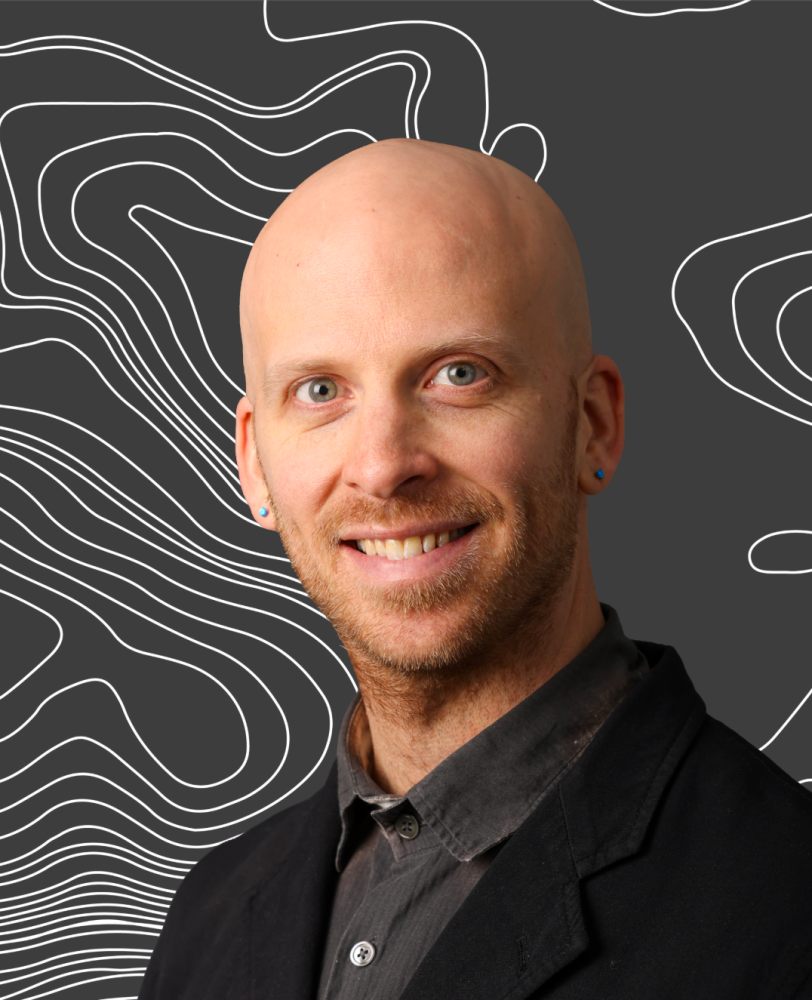
Daniel C. Lander is a Senior Lecturer in the Department of Civil and Environmental Engineering at Rensselaer Polytechnic Institute. His teaching and research sit at the intersection of fluid mechanics, wind engineering, infrastructure, and engineering design.
Daniel teaches courses in fluid mechanics, water resources engineering, wind engineering, thermal-fluid engineering, and introductory engineering design. Across these courses, he emphasizes physical reasoning, modeling assumptions, experimental interpretation, and the role of engineering judgment in open-ended design and analysis.
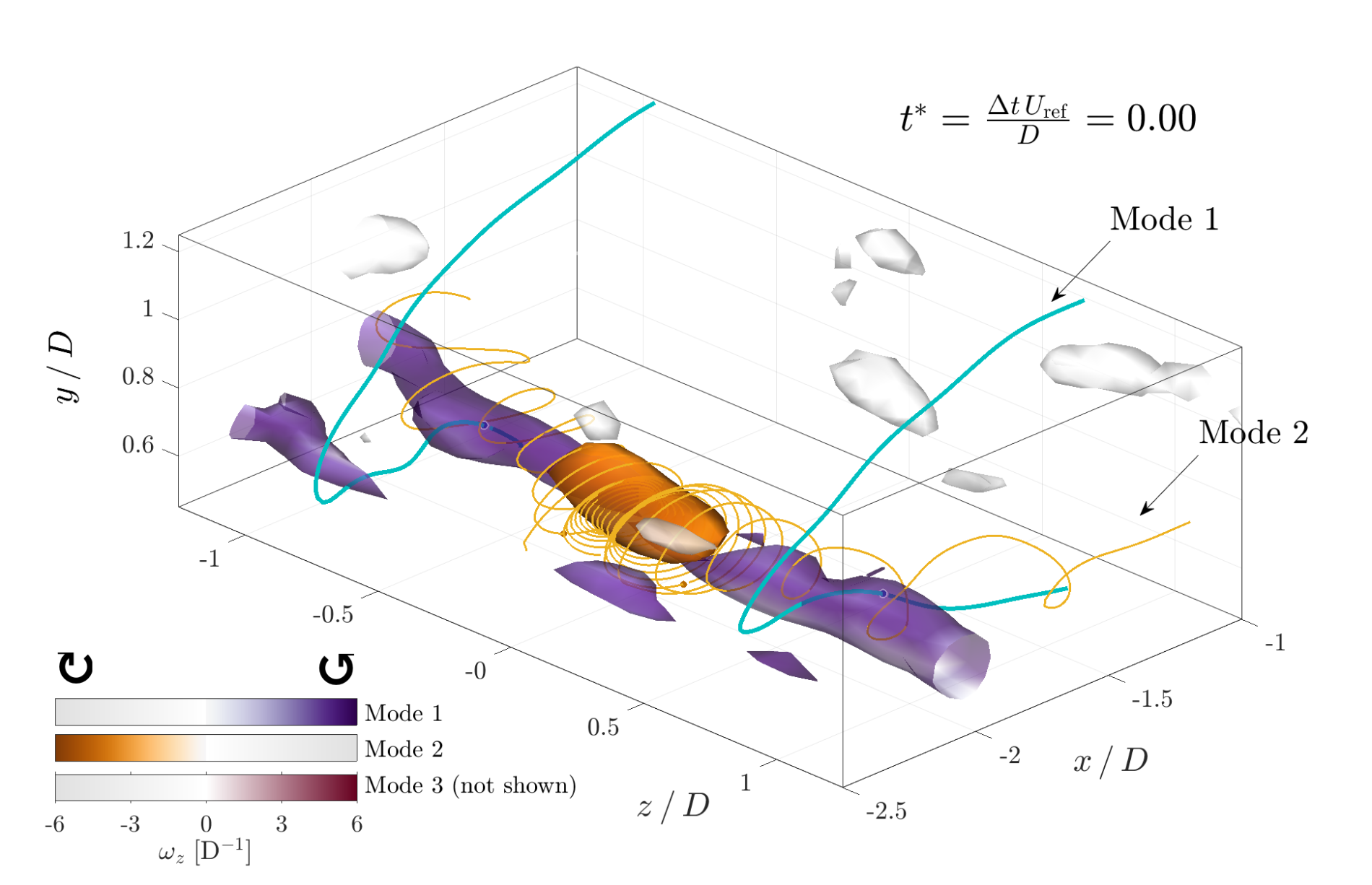
His research focuses on the flow physics of wind loading on structures, especially separated and recirculating flows around bluff bodies. He is interested in how shear-layer transition, vortex shedding, Reynolds-number effects, and free-stream turbulence influence fluctuating and peak pressures. This work connects canonical bluff-body aerodynamics with practical questions in wind-tunnel testing, pressure scaling, partial turbulence simulation, and the resilience of building envelope systems in strong winds.
Daniel received his Ph.D. in Civil and Environmental Engineering from RPI, where he worked with Professors Chris Letchford (CEE) and Michael Amitay (MANE) on the influence of free-stream and forced disturbances on the shear layer of a square prism. His doctoral work bridged wind engineering and aerospace engineering at the Center for Flow Physics and Control. Before coming to Rensselaer, he completed a combined Bachelor of Engineering and Bachelor of Commerce at the University of Sydney, worked with the Wind and Structures group at the Centre Scientifique et Technique du Bâtiment in Nantes, France, and later worked as a project engineer at VIPAC Engineers and Scientists in Australia.
Beyond teaching and research, Daniel has helped organize initiatives that broaden how engineers understand their social and environmental responsibilities. He co-organized Engineering the Anthropocene, a year-long seminar series with Civil and Environmental Engineering and Science and Technology Studies focused on engineering, climate change, justice, and collective responsibility. He is also a co-founder of the Constellation Prize, which recognizes engineering work that advances social justice, environmental protection, human rights, and peace.
Research
My research is on the flow physics of wind engineering: using fundamental fluid mechanics to understand and improve how the built environment performs under wind. My research through line is informing applied wind engineering with first-principles fluids: isolating the physical mechanisms that actually govern loading and response, then carrying that understanding back into design and testing practice.
Wind engineering is distinct because, unlike aerospace or automotive, civil engineers rarely prototype. We build one-offs that have to perform the first time, and they sit in the lower atmospheric boundary layer (the most intensely turbulent, least idealized region of the flow). The physics governing their performance is correspondingly complex, and modest changes in geometry, scale, or turbulence character can drive large changes in the loads that matter. My work lives in that gap between idealized fluid mechanics and the messy reality of the built environment.
Concretely, my interests concern the physics of interactions between free-stream turbulence and separated flows and their inherent dynamics. My work informs a range of applied wind-engineering problems: from novel testing wind tunnel methods to standards (ASCE 49) and the performance of low-rise building systems and attached products. I'm particularly interested in the resilience of "small structures" that are economically significant but poorly characterized and which frequently under-perform in the field.
Recent work with my PhD student (Jing Zhang) on the flow structure's which induce peak pressures in a separation bubble in highly turbulent flows
Teaching
I see teaching and learning as fundamentally relational: genuine transformation depends on the relationship between teacher and student, not just the transfer of information [1,2]. This conviction is grounded in my own experience as a neurodivergent learner who found traditional classrooms difficult. What changed things for me was mentorship—being known as a whole person and receiving honest feedback within a relationship of mutual trust. Drawing on bell hooks's engaged pedagogy [3] and the work of Mezirow [1] and Gillespie [2], I try to build classrooms on trust and solidarity: setting clear expectations, staying consistent between word and action, and being willing to show my own limitations. That history also gives me an embodied empathy for students who learn differently, which shapes how I teach—anchoring theory in lived experience and designing hands-on, engaged-learning activities. My aim is a classroom that can be genuinely transformational, which means staying curious, reflective, and open to being changed by teaching myself.
[1] Mezirow, J. (1997). Transformative learning: Theory to practice. New Directions for Adult and Continuing Education, 74, 5–12.
[2] Gillespie, M. (2005). Student–teacher connection: a place of possibility. Journal of Advanced Nursing, 52(2), 211–219.
[3] hooks, b. (1994). Teaching to transgress: Education as the practice of freedom. Routledge.
During semester: 2 - 5pm Wednesday (confirm JEC 4030 for room/time) or email for appointment
ENGR 2050 — Introduction to Engineering Design
Role: Coordinator (~12 sections/semester) and instructor of record.
A first course in engineering design emphasizing creativity, teamwork, communication, and work across engineering disciplines. Students are introduced to the design process through a semester-long design-build-test project.
CIVL 2050 — Fluid Mechanics for Civil and Environmental Engineering
Role: Instructor of record (~3 sections, Fall semester annually).
Hydrostatics, pressure measurement, fluid properties, and application of control-volume analysis to conservation of mass, energy, and momentum.
CIVL 2060 — Introduction to Water Resources Engineering
Role: Instructor of record (~3 sections, Spring semester annually).
A foundational treatment of water resources engineering through theory, analysis, and design, including the hydrologic cycle, water resources sustainability, planning, pipe flow, and pipe networks.
CIVL 6390 — Wind Engineering
Role: Instructor of record (1 section, offered ~2 years, Fall).
Integrates fluid mechanics, meteorology, climatology, bluff-body aerodynamics, structural dynamics, design-code provisions, wind-tunnel testing, and wind-damage documentation.
ENGR 2250 — Thermal and Fluids Engineering I
Role: Instructor of record (2017–2023).
Application of control-volume balances of mass, momentum, energy, and entropy in systems of practical importance to all engineers. Topics include identification of control volumes, properties of pure materials, mass and energy conservation for closed and open systems, the second law of thermodynamics, the Bernoulli equation, fluid statics, forces and heat transfer in external and internal flows, conduction, and radiative heat transfer.
Publications
The following is a selection of recent publications in Scopus. Daniel Lander has 7 indexed publications in the subjects of Engineering, Energy, Engineering.
The Equity & Infrastructure Seminar Series (Flint Water Crisis)
The Equity & Infrastructure Series is an ongoing co-curricular seminar and teaching initiative organized around the Civil and Environmental Engineering introductory course sequence. The series is developed as a recurring effort to connect technical engineering education with questions of environmental justice, engineering ethics, public decision-making, and community trust.
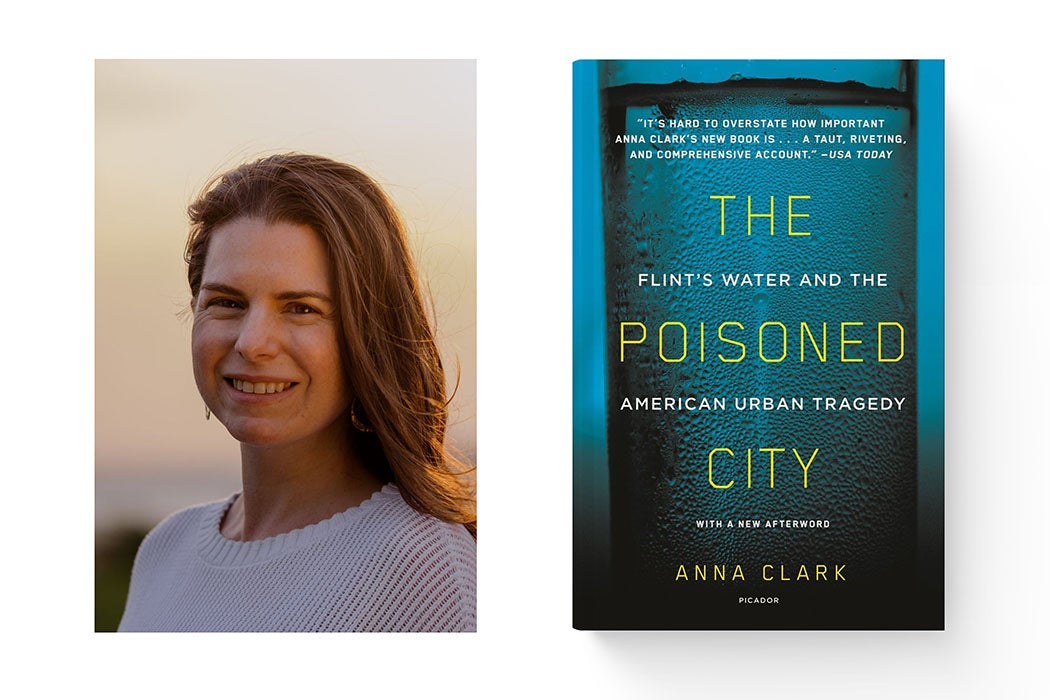
The basic structure pairs a shared case study with linked course activities. Students engage with a common read of Anna Clark’s The Poisoned City, attend talks by engineers, scientists, advocates, educators, and public-health experts, and complete assignments that ask them to connect the Flint Water Crisis to professional responsibility, infrastructure decision-making, and the communities served by civil and environmental engineers.
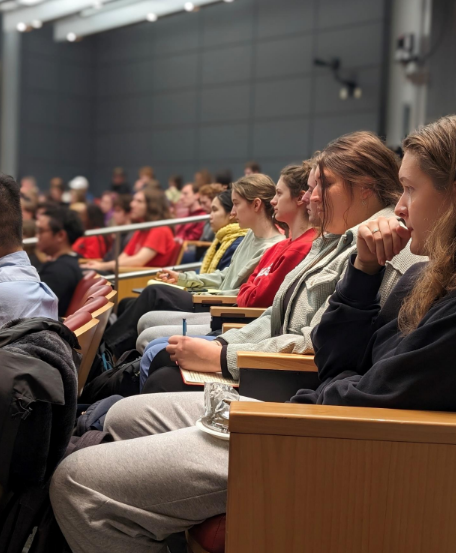
The initiative is intentionally distributed across the CEE "Intro" curriculum (sophomore spring). Rather than treating ethics as a single stand-alone topic, Equity & Infrastructure series places a shared public infrastructure case alongside students’ technical coursework in their introductory CEE courses: Water, Structures, Transport, Geo and Environmental engineering. Students examine what happened in Flint, identify the professional responsibilities of engineers, connect those responsibilities to codes of ethics, and reflect on how similar issues appear in other infrastructure systems and communities.
The series is designed to make visible a broader account of engineering practice. Technical decisions about pipes, water chemistry, testing, design standards, maintenance, and public safety are also decisions about institutions, communication, accountability, and whose concerns are "heard". By placing engineering analysis next to questions of public health, governance, and community advocacy, the Equity & Infrastructure Seminars asks students to consider infrastructure not only as a physical system, but also as a social and ethical commitment.
A central purpose of the initiative is to help students develop a more complete sense of what it means to become an engineer. The series emphasizes that civil and environmental engineers do not simply design systems; they serve publics, interpret evidence, communicate risk, make judgments under uncertainty, and participate in decisions that can either reinforce or repair inequities. In doing so, the series aims to build students’ engineering identity around responsibility, care, technical competence, and public trust.
Participating speakers & seminar topics
• Anna Clark — The Poisoned City: Flint’s Water and the American Urban Tragedy
American journalist with ProPublica; author of The Poisoned City.
• Jason Dolmetsch and Jude Smith-Rachele — Engineering Decision-Making and Its Impacts on Public Health
Dolmetsch is President of MSK Engineers. Smith-Rachele is Co-Founder and CEO of Abundant Sun.
• Marc Edwards — Lessons from the Aftermath of the Flint Water Crisis
Virginia Tech professor and researcher on water quality.
• Elin Betanzo — Engineering Ethics and the Flint Water Crisis
President and Founder of Safe Water Engineering LLC.
• Ronnie Levin — How I Got EPA to Replace 9 Million Lead Pipes
Instructor at the Harvard School of Public Health.
• Darren Lytle — Lead Service Line Identification and Associated Challenges
U.S. EPA environmental engineer working on drinking water management and lead service line identification.
• Kimberly L. Jones — Water Justice: Issues of Water Quality Inequities Across the USA
Howard University Associate Provost and professor.
• Richard Fernandez — Restoring Our Most Sacred Resource
Professional engineer with Aquario Engineering LLC.
• Jona Favreau, Greg Campbell-Cohen, Rob Hayes, and Aaron Vera — Local Lead in Water Crisis Panel Discussion
A local panel bringing together resident advocacy, community organizing, environmental advocacy, municipal engineering, and consulting engineering perspectives.
Undergraduate Hydraulics Teaching Laboratory
I serve as lead faculty for the undergraduate hydraulics teaching laboratory in Civil and Environmental Engineering. The lab supports hands-on teaching across the CEE fluids and water sequence, including Fluid Mechanics for Civil and Environmental Engineering, Introduction to Water Resources Engineering, Introduction to Environmental Engineering, and Applied Hydraulics and Design.
The lab is designed to let students get their hands wet. Students work directly with water flow, measurement devices, pipe systems, pumps, open-channel flow, hydraulic structures, and experimental uncertainty. These activities help students connect conservation principles, empirical relationships, and idealized classroom models to real hydraulic behavior.
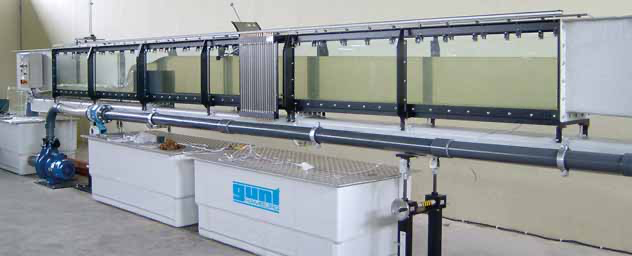
The laboratory includes a state-of-the-art GUNT 5 m water flume for experiments involving open-channel flow, waves, hydraulic jumps, flow transitions, spillways, weirs, contractions, sluice gates, and other hydraulic structures. It also includes two Armfield hydraulic benches used for modular experiments in pipe flow, flow measurement, pumps, jets, orifices, losses, and related fluid-mechanics demonstrations.
Current and recent experiments include:
• Energy loss in pipes
• Minor losses
• Flow meters
• Impact of a jet
• Orifice and free-jet flow
• Osborne Reynolds experiment
• Piping systems
• Pumps
• Sluice gates
• Broad-crested weirs
• Channel contractions
• Hydraulic jump and spillway experiments
• Flume-based open-channel flow demonstrations
• Error analysis and experimental uncertainty
Together, these experiments give students direct engagement with the physical mechanics of water flow: observing flow regimes, measuring hydraulic quantities, comparing data to theory, and interpreting the limits of experimental results. The lab supports a central goal of the CEE fluids and water resources curriculum: helping students move from equations on the page to engineering understanding grounded in observation, measurement, and judgment.
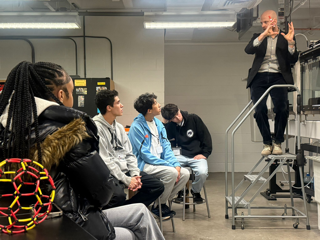
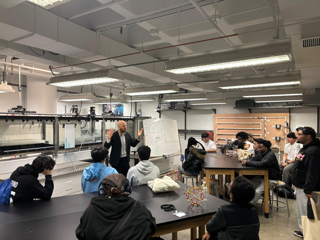
The hydraulics teaching lab is also used for outreach activities, including demonstrations for high school students and hands-on engagement with prospective students and families during accepted students days.
Engineering the Anthropocene
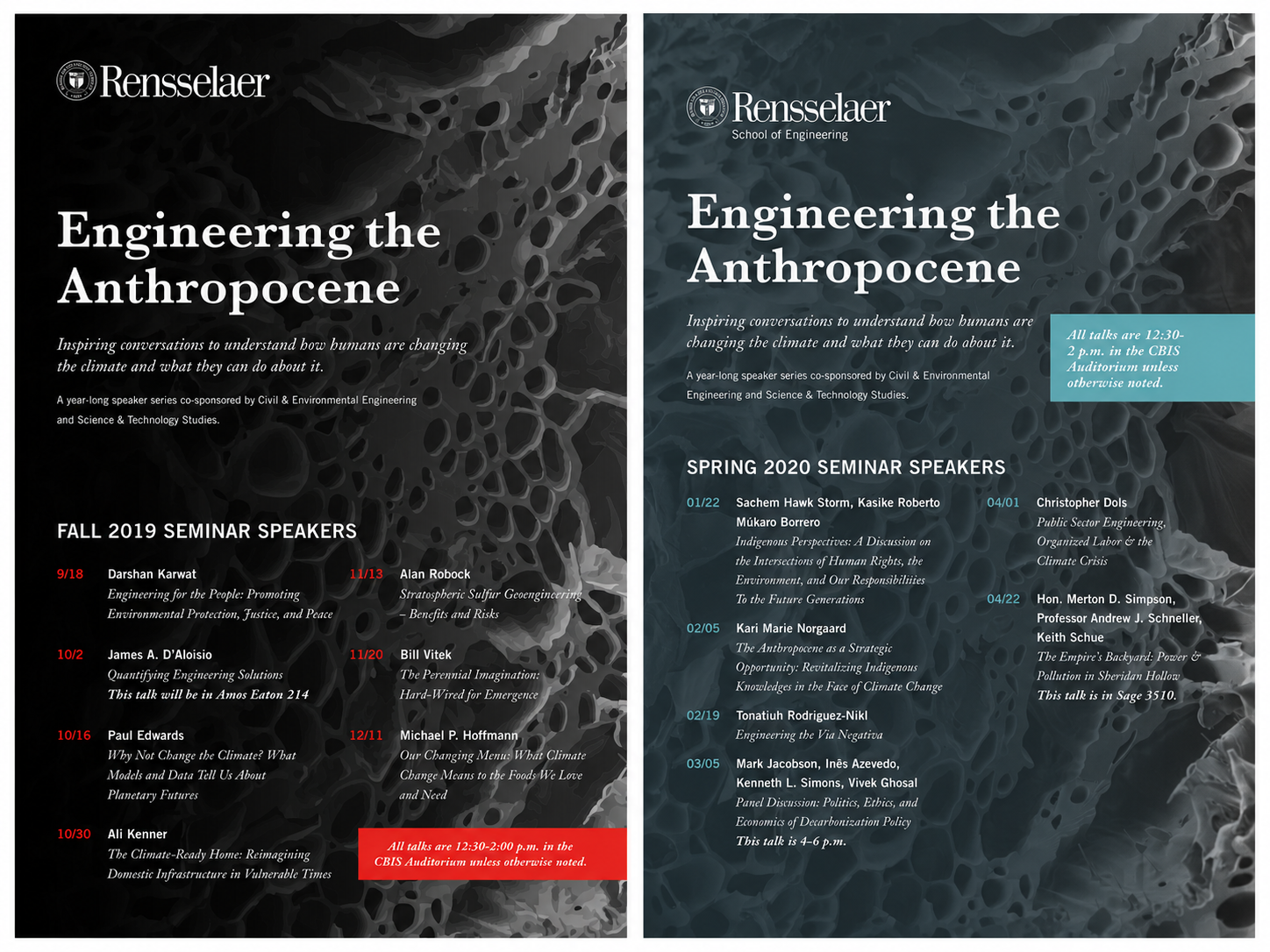
Engineering the Anthropocene was a year-long speaker series co-sponsored by Civil and Environmental Engineering and Science and Technology Studies at Rensselaer. The series brought together engineers, social scientists, policy scholars, Indigenous scholars and activists, and community leaders to explore how humans are changing the climate, what can be done about it, and how engineering education and practice might respond to the biosphere in crisis.
Funded PhD Position: Turbulence, Building Aerodynamics and Wind-Load Design
We are recruiting a PhD student to join a new NSF-funded project advancing Partial Turbulence Simulation (PTS), a wind tunnel method for testing building envelopes, exterior attachments and other small building systems. Wind damage in residential communities often begins with these small, largely non-engineered elements, and conventional tunnel scaling cannot reproduce the turbulence they experience. PTS splits the turbulence spectrum to get around that, and ASCE 49-21 now licenses its broad application without the validation or guidance to constrain it. This project supplies that validation.
The experiments run at the University of Florida NHERI boundary layer wind tunnel, combining surface-pressure and point-velocity measurements with planar time-resolved stereo PIV. The UF team leads the experimental campaign, so a strong background in experimental methods is not critical. The student will be co-advised by Prof. Chris Letchford.
We are prioritizing applicants with a strong foundation in applied fluid mechanics and an interest in turbulence and separated flow, paired with the scientific computing and data-analysis skills to work with large time-resolved datasets. Prior wind engineering experience is not required. Applicants from civil, mechanical, aerospace or environmental engineering, engineering mechanics, or applied physics are all appropriate.
The position is funded. The student receives a stipend and does not pay tuition. This applies equally to international applicants.
Spring 2027 is the preferred start, with Fall 2027 considered for exceptional candidates. Applications are reviewed as they arrive and the position is open until filled.
The award
NSF Award 2529208. Advancing Partial Turbulence Simulation for Wind-Resilient Envelope Systems, Exterior Attachments, and Small Structures. CMMI, Engineering for the Built Environment. September 2026 to August 2029.
Award abstract: https://www.nsf.gov/awardsearch/show-award?AWD_ID=2529208
How to apply
Two steps, both needed.
- Complete the short application form: https://forms.cloud.microsoft/r/Pz2yhjnZc0
- Email Dr. Daniel Lander (landed2@rpi.edu) and Prof. Chris Letchford (letchc@rpi.edu), using the subject line "PTS PhD application - Lastname Firstname", and attach your CV and an unofficial transcript.
The form takes about fifteen minutes. Write to us directly with any questions before applying.
Full details are in the flyer below.
