-
CBIS
-
unzuea@rpi.edu
-
https://orcid.org/0000-0003-1521-6763
About
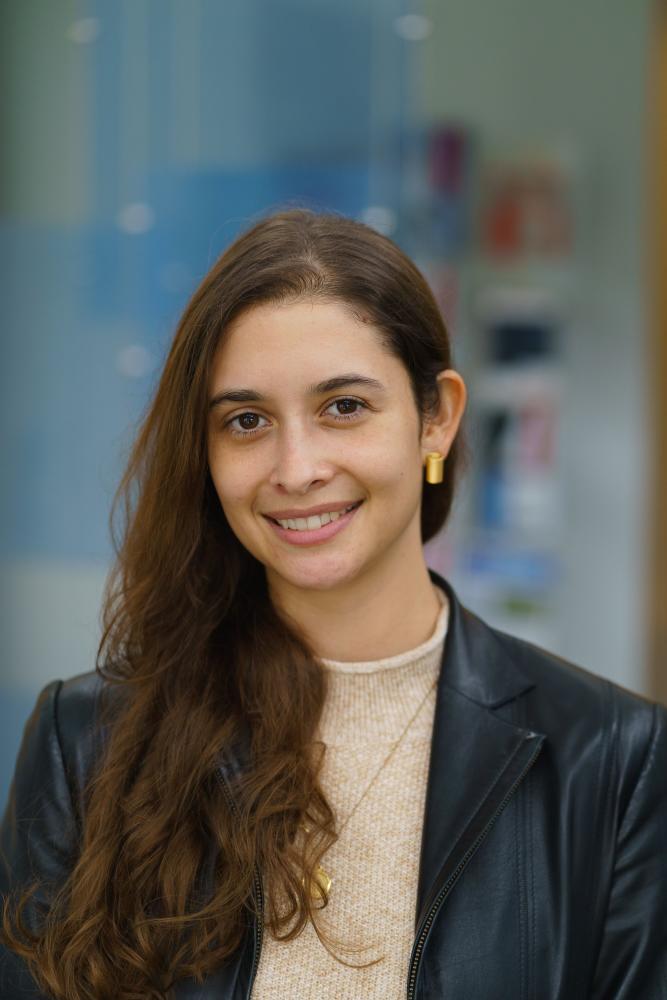
Dr. Unzueta Martínez is an Assistant Professor in the Department of Biological Sciences at Rensselaer Polytechnic Institute. She earned her B.Sc. in Marine Biology from the University of Hawaiʻi at Mānoa and her Ph.D. in Ecology, Evolution, and Marine Biology from Northeastern University. She completed her postdoctoral training at Harvard University as an NSF Postdoctoral Research Fellow in Biology, where she studied microbial and animal physiology. She joined Rensselaer Polytechnic Institute in 2026.
Broadly speaking, Dr. Unzueta Martínez studies how animals and microbes work together to regulate chemistry. Her research focuses on biochemical outsourcing—the ways animals harness microbial metabolism to maintain chemical homeostasis, coordinate physiology, and build biological materials. Using bivalves and biomineralization as primary model systems, she investigates how hosts regulate microbial function and how host–microbe partnerships contribute to shell formation across environments.
NSF Postdoctoral Research Fellow in Biology, 2021–2026
Harvard University
Microbial and Animal Physiology
Ph.D., Ecology, Evolution, and Marine Biology, 2016–2021
Northeastern University
B.Sc., Marine Biology, 2012–2016
University of Hawaiʻi at Mānoa
Research
Dr. Unzueta Martínez studies how animals and microbes work together to regulate internal chemistry. Her research focuses on how animal hosts regulate microbial function and harness microbial metabolism to maintain chemical homeostasis, coordinate physiology, and build biological materials. Using bivalves and biomineralization as primary model systems, she investigates how host–microbe interactions within calcifying fluids influence the chemistry of shell formation. Her work integrates microbial ecology, molecular biology, physiology, chemistry, and geochemistry to uncover general principles of host–microbe coordination across environments and evolutionary histories.
Recognition
National Science Foundation Postdoctoral Research Fellowship in Biology
Northeastern University Dean’s Graduate Student Excellence Award
Northeastern University Dissertation Completion Fellowship
L&O Letters Early Career Publication Honor
National Science Foundation Graduate Research Opportunities Worldwide
National Science Foundation Graduate Research Fellowship Program
Center for Microbial Oceanography Research and Education (C-MORE) Scholar
National Institute of Health Maximizing Access to Research Careers Fellow
Publications
(*: undergraduate student; ‡: corresponding author)
Unzueta-Martínez A.‡, J.A. Delaney, K. Morkeski, A. Ross*, Z.A. Wang, P.R. Girguis.‡ 2026. Coexpression among eastern oyster host and microbiome genes suggests coordinated regulation of calcifying fluid chemistry. Proceedings of the National Academy of Sciences of the United States of America, 123(11), e2521539123.
Unzueta-Martínez A.‡, P.R. Girguis.‡ 2025. Taxonomic diversity and functional potential of microbial communities in oyster calcifying fluid. Applied and Environmental Microbiology. 91:e01094-24.
Unzueta-Martínez A.‡, J.L. Bowen. 2024. Persistent tissue-specific resident microbiota on oysters across a broad geographical range. Environmental Microbiology Reports, 16(5), e70026.
Unzueta-Martínez A.‡, E. Scanes, L.M. Parker, P.M. Ross, W. O’Connor, J.L. Bowen. 2022. Microbiomes of the Sydney Rock Oyster are acquired through both vertical and horizontal transmission. Animal Microbiome 4(1):1-15.
Unzueta-Martínez A.‡, H. Welch*, J.L. Bowen. 2022. Determining the composition of resident and transient members of the oyster microbiome. Frontiers in Microbiology 4350.
Unzueta-Martínez A.‡, A.M. Downey-Wall, L.P. Cameron, J.B. Ries, K. Lotterhos, J.L. Bowen. 2021. Ocean acidification alters the diversity and structure of oyster associated microbial communities. Limnology and Oceanography Letters 6(6): 348-359.
Feinman S.G., A. Unzueta-Martínez*, J.L. Bowen, M.F. Tlusty. 2017. Fine-scale transition to lower bacterial diversity and altered community composition precedes shell disease in laboratory-reared juvenile American lobster. Diseases of Aquatic Organisms. 124(1) 41-51.