-
CBIS 4244C
- reinlk@rpi.edu
-
518-276-2032
- ORCID: 0000-0003-3912-6797
About
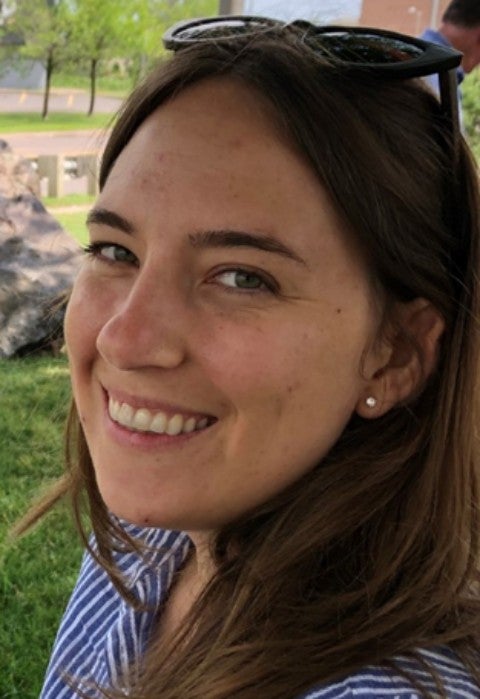
Dr. Kaitlin (Kait) Reinl is a limnologist whose work examines how the synergistic effects of climate and watershed processes shape water quality. Much of her research focuses on phytoplankton — the diverse, foundational organisms that respond rapidly to shifts in light, temperature, and nutrients, making them powerful indicators of aquatic ecosystem change. She investigates phytoplankton responses to environmental change at multiple scales, from short‑term cellular dynamics to long‑term ecosystem trends, and across diverse geographic settings along the freshwater–marine continuum.
Her recent work has centered on understanding the conditions that promote toxic harmful algal blooms in unexpected settings, including cold and low‑nutrient environments. Dr. Reinl uses an interdisciplinary approach that integrates fieldwork, experiments, modeling, and data science, drawing on long‑term ecological datasets to uncover patterns and drivers of ecosystem change.
At RPI, the Reinl Lab advances predictive understanding of how environmental change reshapes aquatic systems, with a focus on scalable approaches that support effective water resource management.
Ph.D. 2021: Water Resources Science – Limnology & Oceanography
University of Minnesota Duluth, Duluth, MN
Advisor: Dr. Robert Sterner
Dissertation: The intersection of climate, watershed influence, and phytoplankton dynamics in Lake Superior
M.S. 2016: Applied Ecology, Minor 2015: Sustainable Water Resources Systems
Michigan Technological University, Houghton, MI
Advisor: Dr. Joseph Wagenbrenner
Thesis: Modeling the impacts of climate change on the surface temperature of inland lakes in Michigan
B.S. 2014: Environmental Engineering
Michigan Technological University, Houghton, MI
Mentor: Dr. Noel Urban
Research
Environmental changes driven by climate and human activity pose significant challenges to aquatic ecosystems, including invasive species, toxic pollutants, eutrophication, harmful algal blooms (HABs), and ecosystem restructuring. Phytoplankton are foundational to all aquatic systems and incredibly diverse, with a wide range of biophysical adaptations. Phytoplankton community dynamics respond to altered resource availability including light, temperature, and nutrients, with major implications for food webs and ecosystem processes. Changes in the phytoplankton community can be an important indicator of ecological shifts, making them ideal for examining the effects of climate, anthropogenic stressors, and other disturbances on aquatic ecosystems. My research explores these responses at multiple scales, from short-term cellular responses to long-term ecosystem trends, and across diverse geographic settings. My research is broadly framed by three key questions:
- How do climate and watershed processes interact to influence in-lake processes?
- What are the spatial and temporal trends in water quality, and do the drivers of those trends vary geographically and/or with scale?
- How do the combination of phytoplankton traits and external drivers such as temperature, light, and nutrient stoichiometry shape phytoplankton communities?
To tackle these questions, I employ an interdisciplinary approach that combines fieldwork, experimental research, modeling, and data science, leveraging existing datasets (e.g., LAGOS modules, National Estuarine Research Reserve System-Wide Monitoring Program, NEON, LTER LTREB, and others) to identify trends and understand processes.
Teaching
I embrace an authentic learning pedagogy in my courses, helping students apply classroom concepts directly to real-world scenarios. This approach deepens student engagement and strengthens their practical understanding. For example, I co- led the development of a grant-funded graduate course to train students in data science and user-driven research. Students collaborated with seven National Estuarine Research Reserves (NERRs), analyzing long-term monitoring data to tackle site-specific science and management challenges. They worked closely with their NERR partner throughout the process—matching based on interests, setting expectations, receiving iterative feedback, and refining deliverables. One student reflected, “This class did a fantastic job of expanding my toolkit of time series analysis techniques that will be undoubtedly invaluable throughout my career. Using real data from a long-term monitoring network and engaging with people working in that network was a great motivator and showcased real uses for the skills we learned.” This hands-on approach deepens student learning, strengthens community connections, and provides opportunities to contribute to meaningful scientific and management efforts while expanding professional networks.
Undergraduates at Rensselaer:
2026: Lucas Bouchie
Project: Operationalizing sensors for early detection of harmful algal blooms
Doctoral students at other universities:
2023-2025 Kenneth Larson, Michigan Technological University, Margaret A. Davidson Fellowship Mentor
2024-present: Augustus Pendleton, Cornell University, Margaret A. Davidson Fellowship Mentor, Ph.D. thesis committee member
Undergraduates at other universities:
2023: Ethan Ly
Project: Evaluating effects of turbidity and algal species on TAL sensor accuracy
Current position: M.S. student at Texas A&M
2024-2025: Janae Widiker
Project: Evaluating the accuracy of cyanotoxin rapid test strips
2024: Emma Kleinschrodt
Project: Evaluating the accuracy of cyanotoxin rapid test strips
2025: Rylee Burkhart
Project: Understanding spatiotemporal variability of phytoplankton communities in the St. Louis River Estuary in collaboration with USGS
Recognition
2024: Top cited article for Limnology and Oceanography Letters Journal for 2023-2024: Blooms also like it cold
2023: Top cited article for Freshwater Biology Journal for 2021-2022: Cyanobacterial blooms in oligotrophic lakes: Shifting the high-nutrient paradigm
2021: UCOWR Recipient for Outstanding Dissertation Award in Natural Science and Engineering
Invited Talks
K.L. Reinl. Blooms also like it cold. Author Spotlight, ASLO 2025, Charlotte, NC.
K.L. Reinl. At the Confluence: Research at the Lake Superior NERR. Invited talk for the Trout Lake Summer Seminar Series. 2024.
K.L. Reinl. Widespread Eutrophication and Oxygen Declines in U.S. Estuaries. Invited talk for the Twin Ports Freshwater Folk Seminar Series. 2024.
K.L. Reinl. What makes a cyanobacterial bloom disappear? Invited talk for the Diatom Web Academy. 2024.
K.L. Reinl. Cyanobacterial Surprises: Exploring unexpected blooms and unraveling their causes. Invited talk for the ASLO 2024 Meeting, Madison, WI.
K.L. Reinl. Blooms in unexpected places. Invited talk for the HABs Collaborative. 2024.
KL Reinl, E Olson, G Gerrish, G. Graham – Panelist “Water Resources”. Extension Northwoods Forum, Lac du Flambeau. 2024.
K.L. Reinl. Blooms also like it cold. Invited talk for the Environmental Protection Agency – Great Lakes Toxicology and Ecology Division monthly seminar. 2023.
KL Reinl, M O’Brien, ML Messager, S McCord, M Kolian, P Julian, M Seul, A Whitmire – Panelist “Operationalizing Interoperability” Virtual Summit: Incorporating Data Science and Open Science in Aquatic Research 2022, Virtual.
KL Reinl. “Effects of the St. Louis River Estuary on Water Quality in Lake Superior” Guest Lecture at University of Minnesota Duluth Water Resources Science Seminar Series 2022.
Research in the news
Milwaukee Journal Sentinel January 2025: Climate change causes Wisconsin weather records to fall in unprecedented ways.
KFGO Radio July 2023: Researchers warn of harmful algal blooms in Lake Superior.
WTIP North Shore Community Radio July 2023: Scientists urge the public to be on the lookout for harmful algal blooms in Lake Superior.\
Global Lake Ecological Observatory Network (GLEON) Blog 2023: How GLEON has enabled me to do exceptional research.
Wisconsin Public Radio 2023: Algal blooms like hot temperatures—but can occur in cold water, new study shows.
Wisconsin Public Radio 2023: Toxic algal blooms are growing through Wisconsin winters.
Minnesota Public Radio News February 2023: Study: Harmful algae blooms like it hot—but can occur in cold water.
Milwaukee Journal Sentinel August 2022: Climate change spurs algae blooms in Lake Superior, Michigan, and Wisconsin.
Star Tribune 2021: Hot summer causes algae blooms to become more common on Lake Superior.
UpNorthNews Wisconsin October 2021: How climate change is causing harmful algae blooms on Lake Superior.
FOX 21 News August 2018: Blue-green algae blots Lake Superior.
Cooperative Institute for Great Lakes Research (CIGLR) Newsletter Fall 2018; Great Lakes Now September 2018: Featured research: Lake Superior harmful algal blooms.
Publications
G = mentored graduate student, U = mentored undergraduate student, P = mentored postdoctoral researcher, T = mentored technician
** = corresponding author, * = co-lead author
Peer-Reviewed Publications
Reinl, K. L*., Dunn, R. P., Cressman, K. A., Collins, T., DeBose, J. L., Friedrichs, C. T., Goldstein, J. S., Helms, A. R., Kinkade, C., Krask, J. L., Parrish, D. B., Nicklay, H. N., Ridge, J. T., Sanger, D. M., Cianci-Gaskill, J. A., Dix, N. G., Grothues, T. M., McMurray, S. E., & Peter, C. (2026). In situ observations reveal continental-scale warming, oxygen decline, and eutrophication in U.S. estuaries. Communications Earth & Environment, 7(1), 716. https://doi.org/10.1038/s43247-026-03934-w
Reinl, K. L*., Dunn, R. P., Kinkade, C., & Cressman, K. (2025). Advancing Estuarine Science and Management Through Long‐Term Research and Monitoring in the U.S. National Estuarine Research Reserve System. Journal of Geophysical Research: Biogeosciences, 130(4), e2024JG008630. https://doi.org/10.1029/2024JG008630.
Soranno, P. A., Hanly, P. J., Webster, K. E., Wagner, T., McDonald, A., Shuvo, A., Schliep, E. M., Reinl, K. L., McCullough, I. M., Tan, N., Lottig, N. R., & Cheruvelil, K. S. (2025). Abrupt changes in algal biomass of thousands of US lakes are related to climate and are more likely in low-disturbance watersheds. PNAS, 122(9). https://doi.org/10.1073/pnas.2416172122
Harris, T. D.; Reinl, K. L.**; Azarderakhsh, M.; Berger, S. A.; Berman, M. C.; Bizic, M.; Bhattacharya, R.; Burnet, S. H.; Cianci-Gaskill, J. A.; Domis, L. N. D. S.; Elfferich, I.; Ger, K. A.; Grossart, H.-P. F.; Ibelings, B. W.; Ionescu, D.; Kouhanestani, Z. M.; Mauch, J.; McElarney, Y. R.; Nava, V.; North, R. L.; Ogashawara, I.; Paule-Mercado, M. C. A.; Soria-Píriz, S.; Sun, X.; Trout-Haney, J. V.; Weyhenmeyer, G. A.; Yokota, K.; Zhan, Q. (2024). What Makes a Cyanobacterial Bloom Disappear? A Review of the Abiotic and Biotic Cyanobacterial Bloom Loss Factors. Harmful Algae, 133,102599. https://doi.org/10.1016/j.hal.2024.102599
Endris, C.; Shull, S.; Woolfolk, A.; Brophy, L. S.; Brumbaugh, D. R.; Crooks, J. A.; Reinl, K. L.; Fuller, R.; Sanger, D. M.; Stevens, R. A.; Almeida, M.; Wasson, K. (2024). Lost and Found Coastal Wetlands: Lessons Learned from Mapping Estuaries across the USA. Biological Conservation, 299, 110779. https://doi.org/10.1016/j.biocon.2024.110779
Lapierre, J.; Webster, K. E.; Hanks, E. M.; Wagner, T.; Soranno, P. A.; McCullough, I. M.; Reinl, K. L.; Domka, M.; Lottig, N. R. (2023). A Continuous Classification of the 476,697 Lakes of the Conterminous US Based on Geographic Archetypes. Limnology & Oceanography, 68(12), 2759–2773. https://doi.org/10.1002/lno.12457
Reinl, K. L.*, Harris, T. D., North, R. L., Almela, P., Berger, S. A., Bizic, M., Burnet, S. H., Grossart, H., Ibelings, B. W., Jakobsson, E., Knoll, L. B., Lafrancois, B. M., McElarney, Y., Morales‐Williams, A. M., Obertegger, U., Ogashawara, I., Paule‐Mercado, M. C., Peierls, B. L., Rusak, J. A., … Yokota, K. (2023). Blooms also like it cold. Limnology and Oceanography Letters, 8(4), 546–564. https://doi.org/10.1002/lol2.1031
Reinl, K. L., Harris, T. D., Elfferich, I., Coker, A., Zhan, Q., De Senerpont Domis, L. N., Morales-Williams, A. M., Bhattacharya, R., Grossart, H.-P., North, R. L., & Sweetman, J. N. (2022). The role of organic nutrients in structuring freshwater phytoplankton communities in a rapidly changing world. Water Research, 219, 118573. https://doi.org/10.1016/j.watres.2022.118573
Reinl, K. L.*, Brookes, J. D., Carey, C. C., Harris, T. D., Ibelings, B. W., Morales‐Williams, A. M., De Senerpont Domis, L. N., Atkins, K. S., Isles, P. D. F., Mesman, J. P., North, R. L., Rudstam, L. G., Stelzer, J. A. A., Venkiteswaran, J. J., Yokota, K., & Zhan, Q. (2021). Cyanobacterial blooms in oligotrophic lakes: Shifting the high‐nutrient paradigm. Freshwater Biology, fwb.13791.
https://doi.org/10.1111/fwb.13791
Sterner, R. W., Reinl, K. L., Lafrancois, B. M., Brovold, S., & Miller, T. R. (2020).
A first assessment of cyanobacterial blooms in oligotrophic Lake Superior. Limnology and Oceanography, 65, 2984–2998.
https://doi.org/10.1002/lno.11569
Reinl, K. L.*, Sterner, R. W., Lafrancois, B. M., & Brovold, S. (2020).
Fluvial seeding of cyanobacterial blooms in oligotrophic Lake Superior. Harmful Algae, 100, 101941–101941. https://doi.org/10.1016/j.hal.2020.101941
Reinl, K. L.*, Sterner, R. W., & Austin, J. A. (2020).
Seasonality and physical drivers of deep chlorophyll layers in Lake Superior, with implications for a rapidly warming lake. Journal of Great Lakes Research, 46, 1615–1624. https://doi.org/10.1016/j.jglr.2020.09.008
Datasets
Blackburn, S[P]. 2026. Lake Superior, St. Louis Estuary, and Associated Tributaries Nutrient and Water Quality Data Synthesis (2010-2025) ver 1. Environmental Data Initiative. https://doi.org/10.6073/pasta/d5ba77fd69e26fcc4ad2bca4a5dd0ca8 (Accessed 2026-05-15).
Lafrancois, B. and K.L. Reinl*. 2025. Lake Superior cyanobacterial bloom reports, 2012 - present ver 2. Environmental Data Initiative. https://doi.org/10.6073/pasta/ed4740d1e1284db90df551d7aef865de (Accessed 2025-04-24)
Lafrancois, B. and K.L. Reinl*. (2024). Lake Superior cyanobacterial bloom reports, 2012 - present ver 1. Environmental Data Initiative. https://doi.org/10.6073/pasta/89d1b199d4bdb8d82847c7f39d1018be
Shuvo, A.K., N.R. Lottig, K.E. Webster, A. Delany, K.L. Reinl, C. Gries, N.J. Smith, A.C. Poisson, I.M. McCullough, S.M. Collins, K.B. King, E. Phillips, K.S. Cheruvelil, and P.A. Soranno. (2023). LAGOS-US LIMNO: Data module of surface water chemistry from 1975-2021 for lakes in the conterminous U.S. ver 5. Environmental Data Initiative.
https://doi.org/10.6073/pasta/2c58f5a50ab813919f99cc1f265f271c
Non Peer-Reviewed Publications
Widiker, J[U], Reinl, K.L. 2025. Accuracy of Rapid Test Strips for the Detection of the Cyanotoxin Microcystin; UW-Madison. http://digital.library.wisc.edu/1793/95367.
Nicklay, H., Filstrup, C., Reavie, E., Birschbach, P, Reinl, K.L., Widiker, J, Schuldt, N., Erickson, D. 2025. Building a collaborative monitoring strategy for a changing St. Louis River Estuary: a recommendation report; UW-Madison. http://digital.library.wisc.edu/1793/95360.
Banesh, K., Reinl, K. L., Lafrancois, B. 2024 Lake Superior Bloom Bulletin; UW-Madison. http://digital.library.wisc.edu/1793/95214.
Banesh, K., Lafrancois, B., Reinl, K. L. 2023 Lake Superior Bloom Bulletin; UW-Madison. https://doi.org/10.21231/9058-915B.
Banesh, K., Lafrancois, B., Reinl, K. L., Banerji, A. 2022 Lake Superior Bloom Bulletin; UW-Madison. https://doi.org/10.21231/F64B-C8BA.
Moen S., K.L. Reinl, E.L. Green, K. Rhude, M. Castro, and G. Spilkia. 2019. Identifying Science and Monitoring Priorities for Lake Superior: Synthesis of the 2019 Lake Superior CSMI Workshop. Proceedings of a workshop held at the U.S. Environmental Protection Agency Mid-continent Ecological Division Laboratory in Duluth, Minnesota, July 10- 11, 2019. Prepared for the Science Advisory Board of the International Joint Commission by Minnesota Sea Grant. 45 pp.
Reinl, Kaitlin*. 2016. Assessing the impacts of climate change on the surface temperature of inland lakes in Michigan. Master’s Thesis. Michigan Technological University.
igan Technological University.